Week 19: Heating in Brno
Nov. 5, 2022So recently, we received a notification in the mail from our heating company about the energy crisis (for the Brno apartment, not the house) and I thought it was really interesting and that I’d share it here.
I also realised that HOW we heat in Brno is different from any system that I’d ever experienced before and so wanted to share information about it. I’m still simply amazed by how this works even though it is by no means unique to Brno.
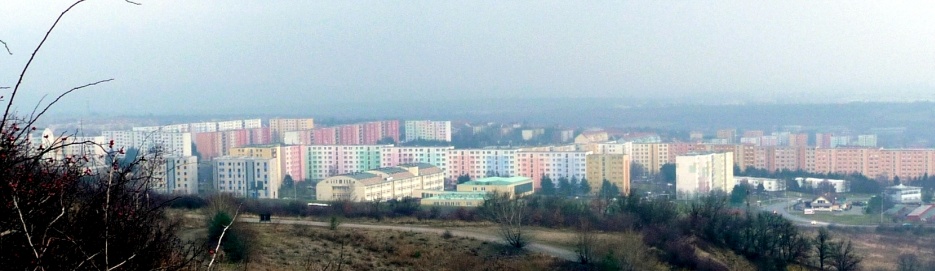
During the era of communism, one of the benefits is that everyone was guaranteed a home. The downside is that it was not going to be a nice one. Each person was alotted 9 square meters, or slightly less than 100 square feet. So this means that a family of four would be allotted 400 square feet to live in. They generally accomplished this by creating massive swaths of horribly built, concrete block apartment complexes, called sídliště (seed-leesh-tye). (See an example of one of the biggest in Brno below.) These sídliště had to be heated and since the government was responsible for keeping everyone with heat, and all of the thousands of people were living in a concentrated area, it was easier to have a single location off-site to create the heat and then transport that heat to the buildings.
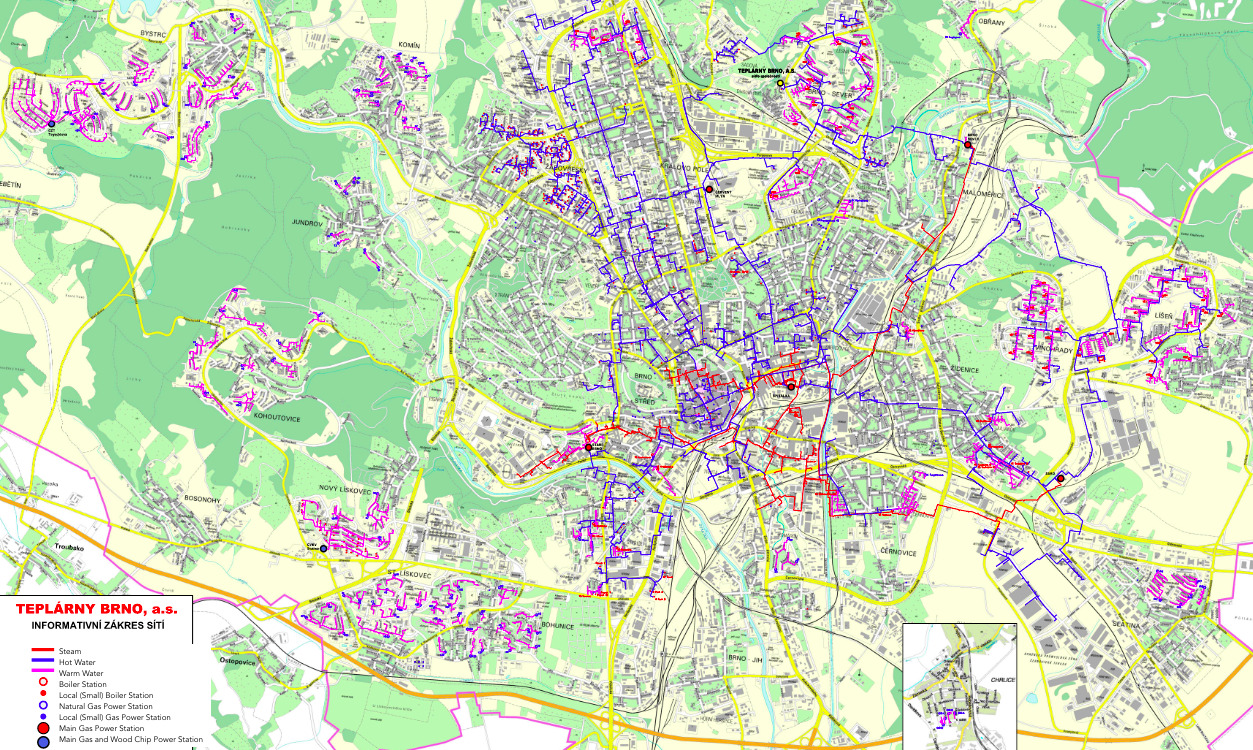
Which leads me to the entire topic. This type of heating is called “district heating” where there is a heating factory a densely populated area which creates the heat and then transports it to users, rather than each apartment or building having its own heater. Brno uses 3 types of heat - hot water, warm water and steam. Steam is the oldest of these and in recent years, the steam system is being replaced with the hot and warm water systems.
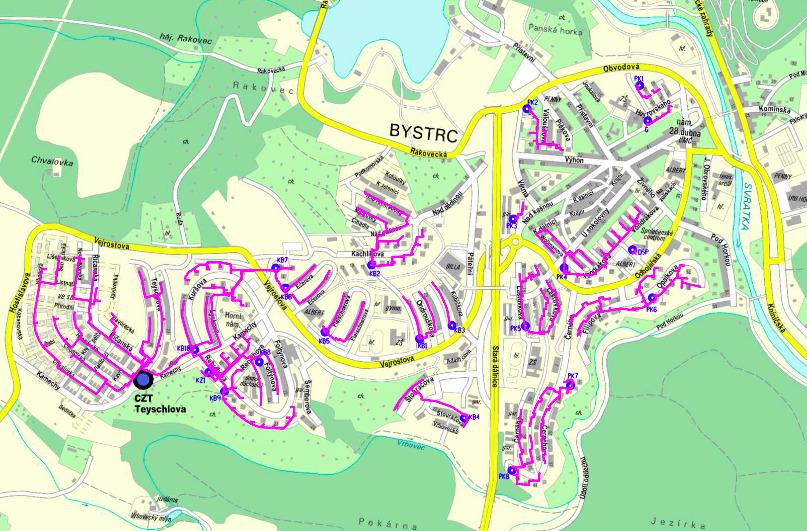
You can see in the image below a diagram of the heating pipes that are spread throughout Brno. Red lines are the original steam pipes, blue are hot water and pink are warm water. Where we live, in Bystrc (upper left corner in this photo and a zoomed in version below), our heat comes from a local station that uses a combination of natural gas and wood chips.
To give you an idea of price, we paid about 14,000 CZK for hot water last year. That is about $700USD. So that was our price for ALL of our hot water for the year - baths, showers, washing dishes and most importantly - our heat. This coming year will be higher due to the energy crisis…which leads to the notice that our heating company sent us with recommendations for how to save money on heating this winter!
From Teplárny Brno, our heating provider. All the text below is translated to english by me so it’s not my commentary, just a translation:
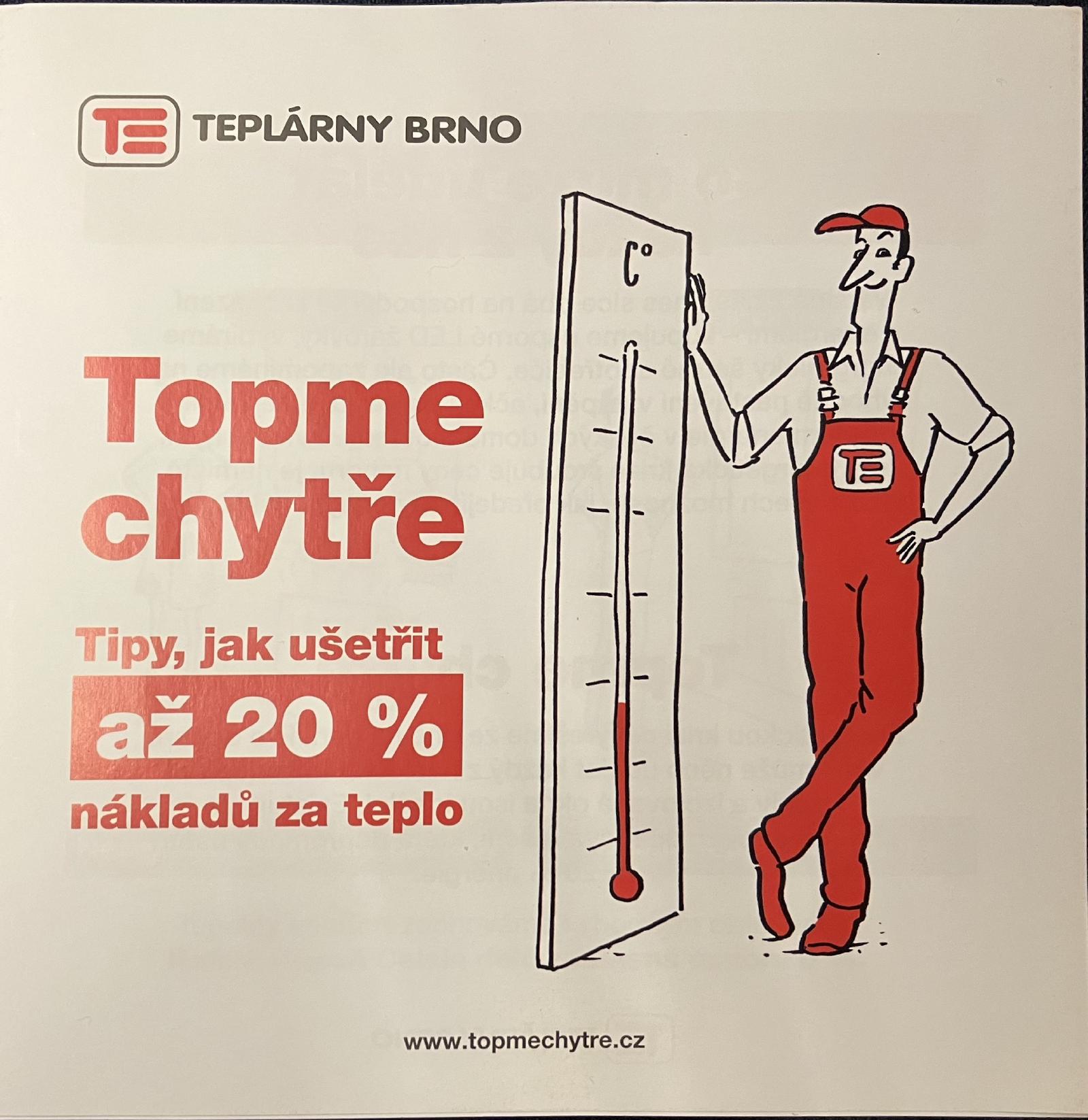
| Let's Heat Smartly |
| Tips How to Save Up to 20% on the Cost of Heat |
| What Everyone Can Do to Help |
Most of the time, we try to be energy efficient - we buy energy saving LED light bulbs and carefully select energy efficient appliances. However, we often forget to set our thermostats correctly even though this is the highest energy user in Czech homes. Especially now, as the energy crisis drives prices higher, it is important to use all available options to avoid unnecessary costs.
| Let's Heat Smartly |
We will not solve the energy crisis overnight, however each of us can do something to contribute. Having properly insulated exterior walls and windows are ideal, however, there are other ways that can help you to save up to 20% on your energy bill each month.
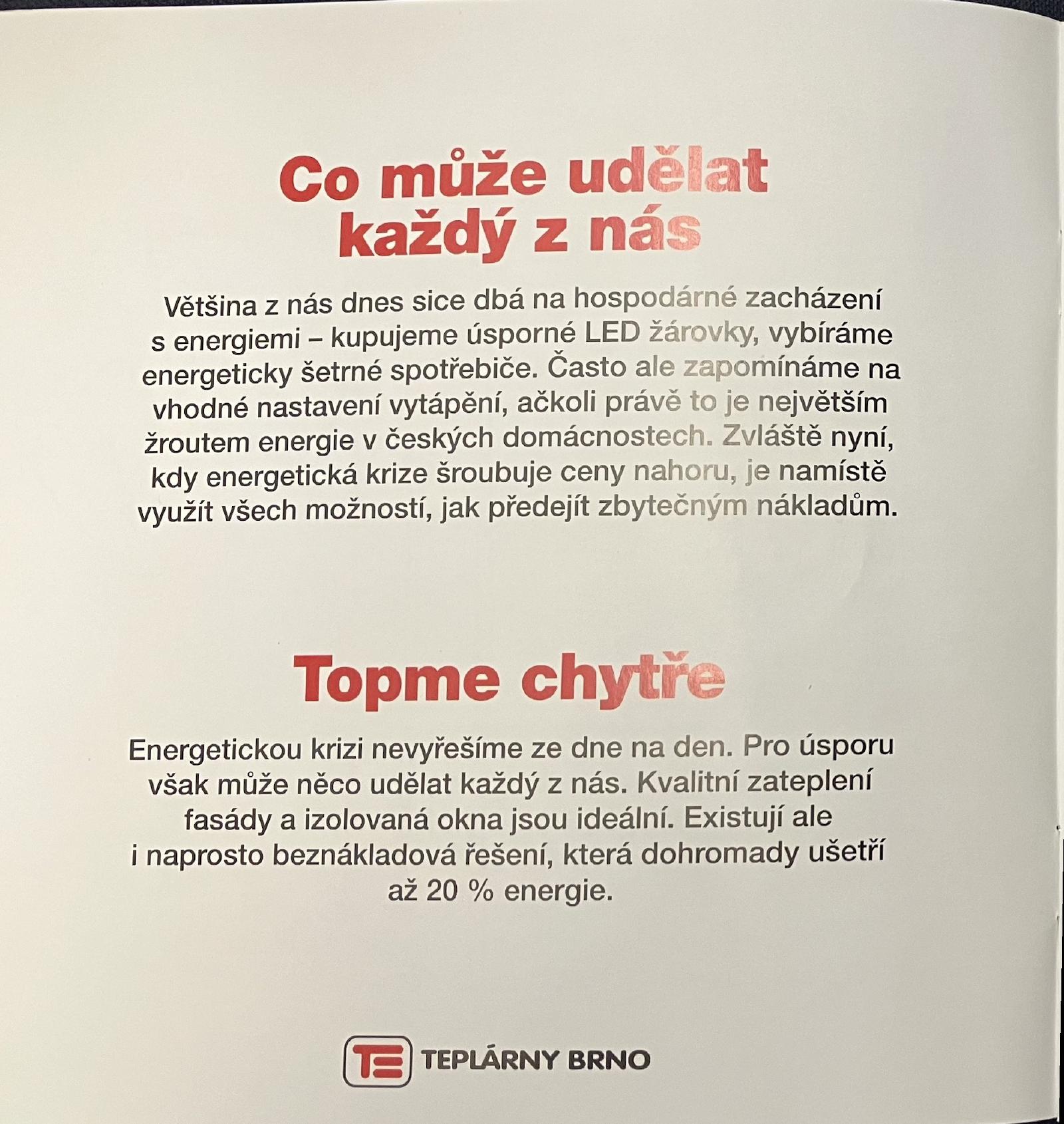
| Do Not Overheat |
| Don't increase temperatures unnecessarily : 75 °F | Ideal Temperatures = Savings : 68 - 70 °F |
Maintain a comfortable temperature by wearing appropriate clothing. Every degree Celcius that you turn the thermostat down means a 6% savings.
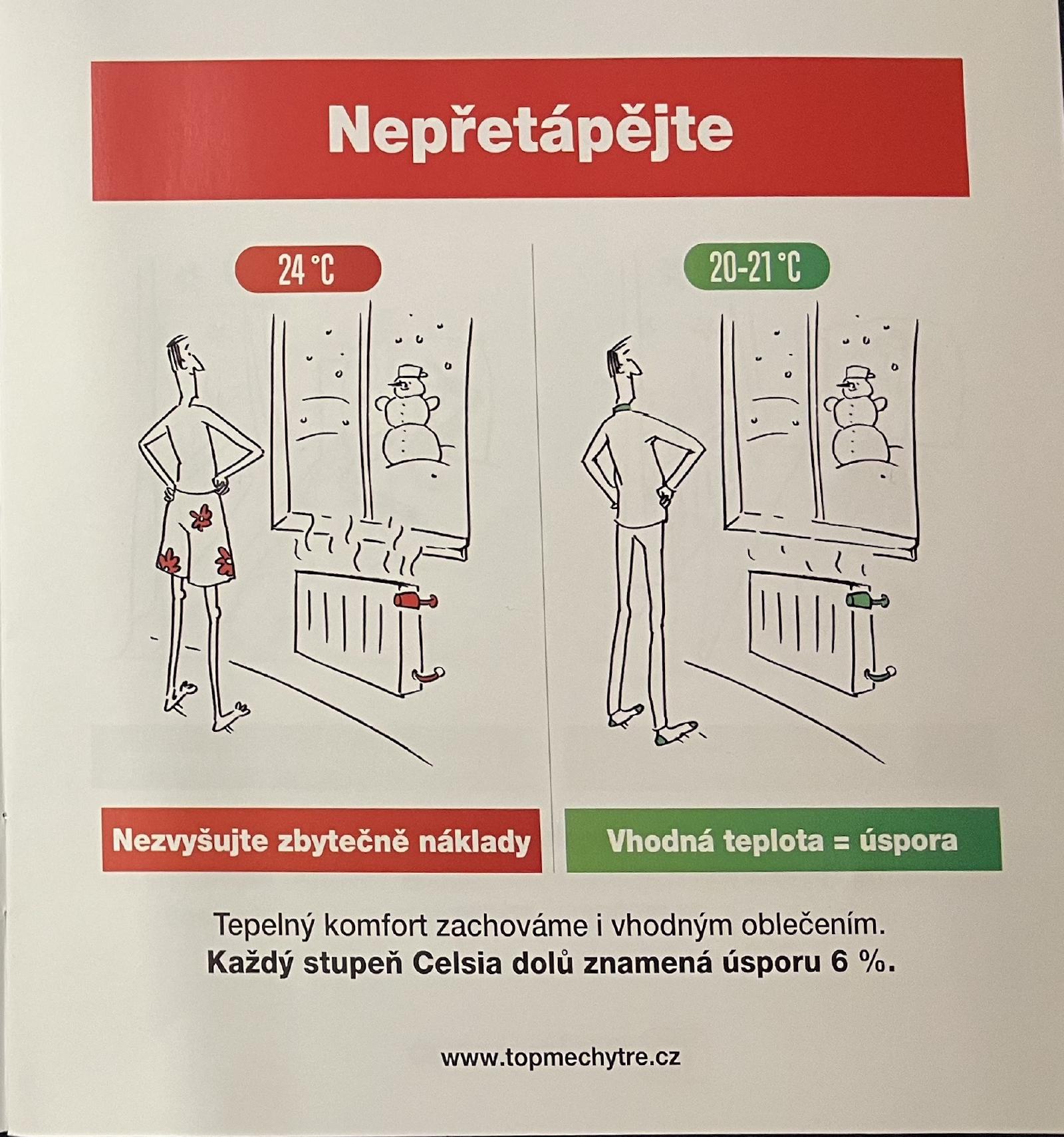
| Select the correct temperatures for sleeping |
| Don't waste energy : 72 °F | Indulge in quality sleep : 61 - 63 °F |
Dry air puts more strain on our airways. In addition to increased costs, higher temperatures in the bedroom are not good for your health.
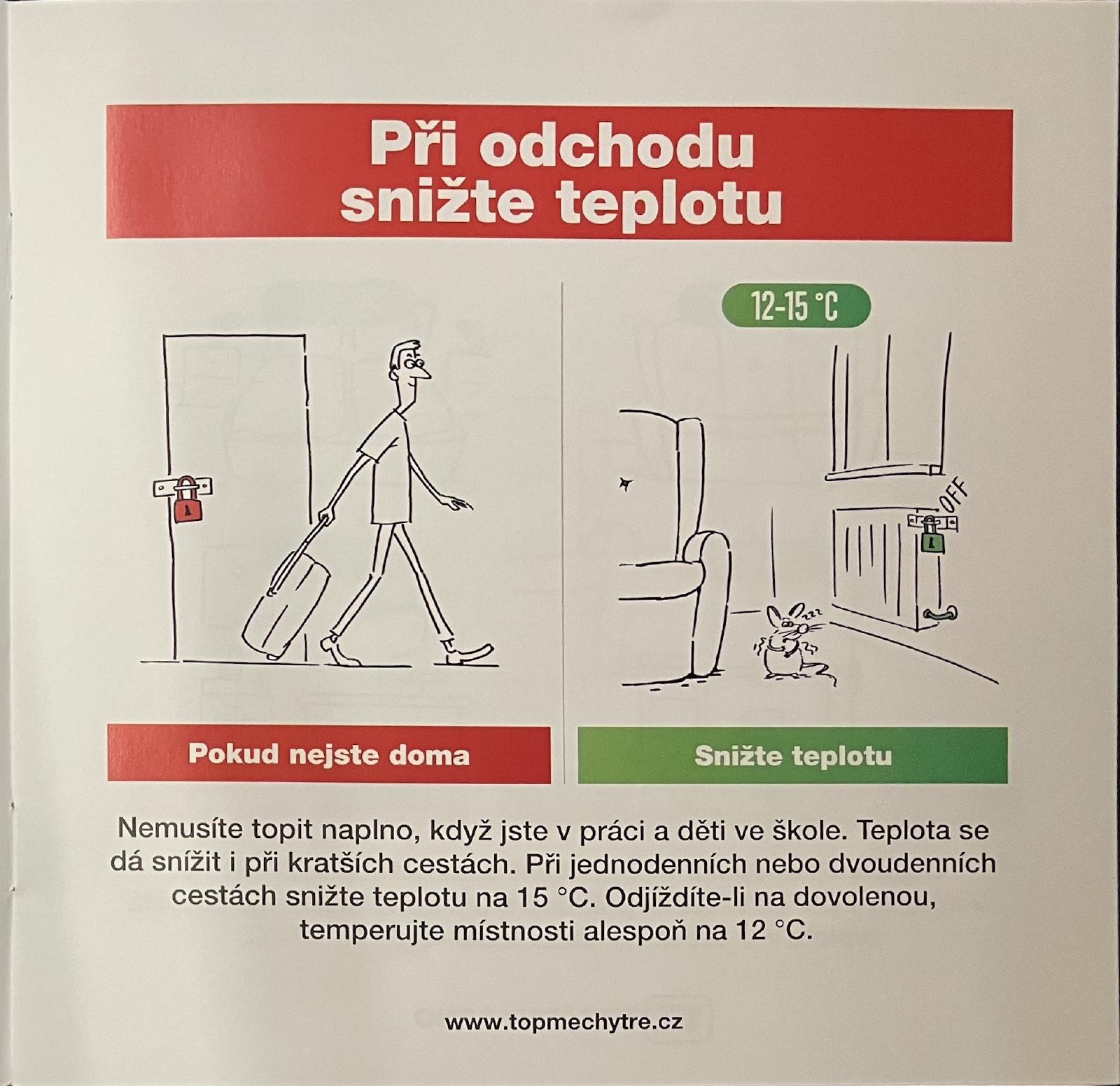
| Turn down the thermostat when you leave |
| If you're not home...Turn down the thermostat : 54 - 59 °F |
You don’t have to fully heat when you’re at work and the children are at school.
Turn down the temperatures even for short trips. If you are gone for a one or
two day trip, turn the temperature down to 15 °C (59 °F). If you go on vacation, turn it
down to at least 12 °C (54 °F).
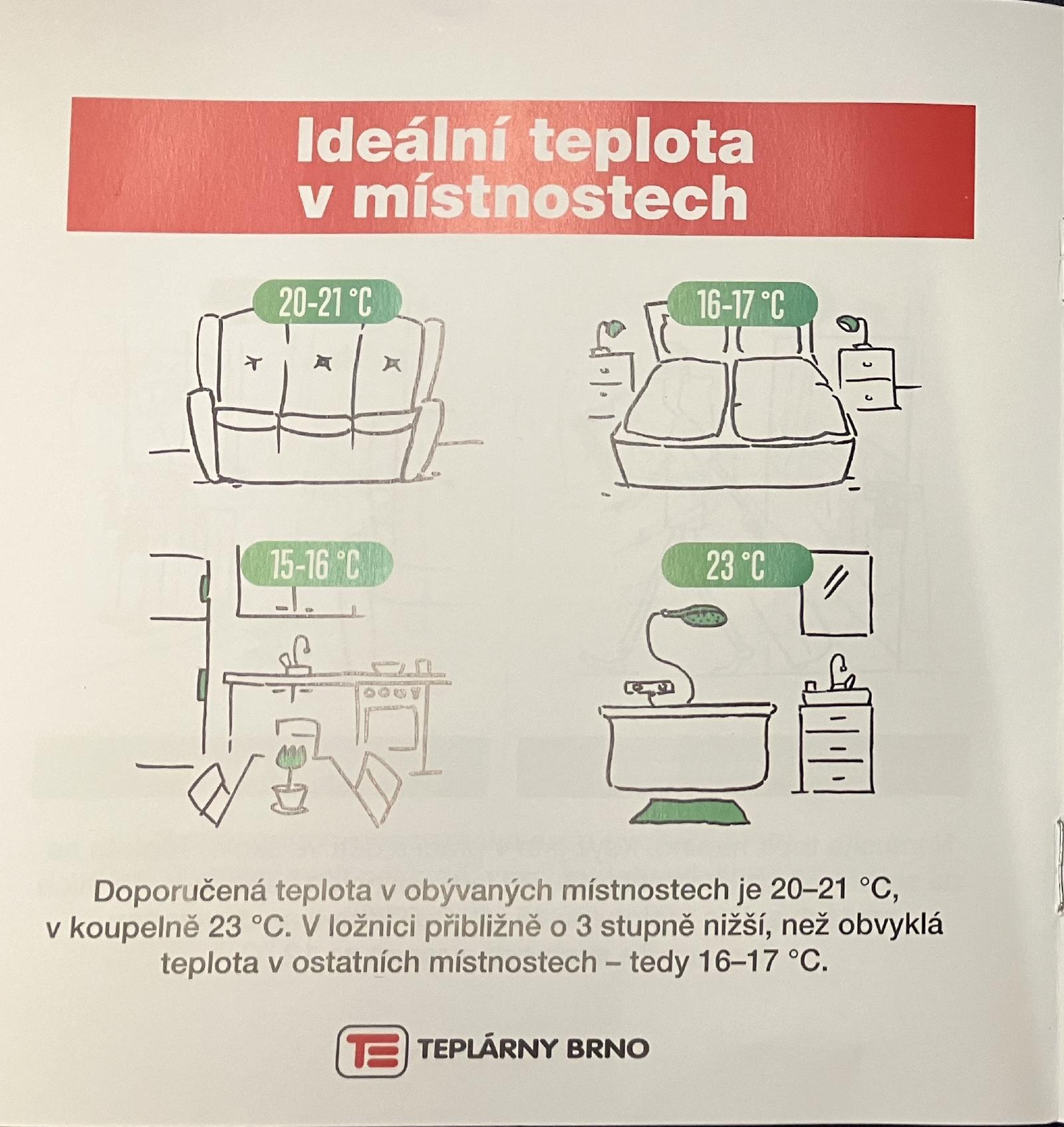
| Ideal Room Temperatures |
The recommended temperature in the living room is 68 - 70 °F, in the bathroom is 73 °F. In the bedroom, keep the temperature about 3 degrees (C) lower than the rest of the house, or about 61 - 63 °F. Keep the kitchen at 59 - 61 °F.
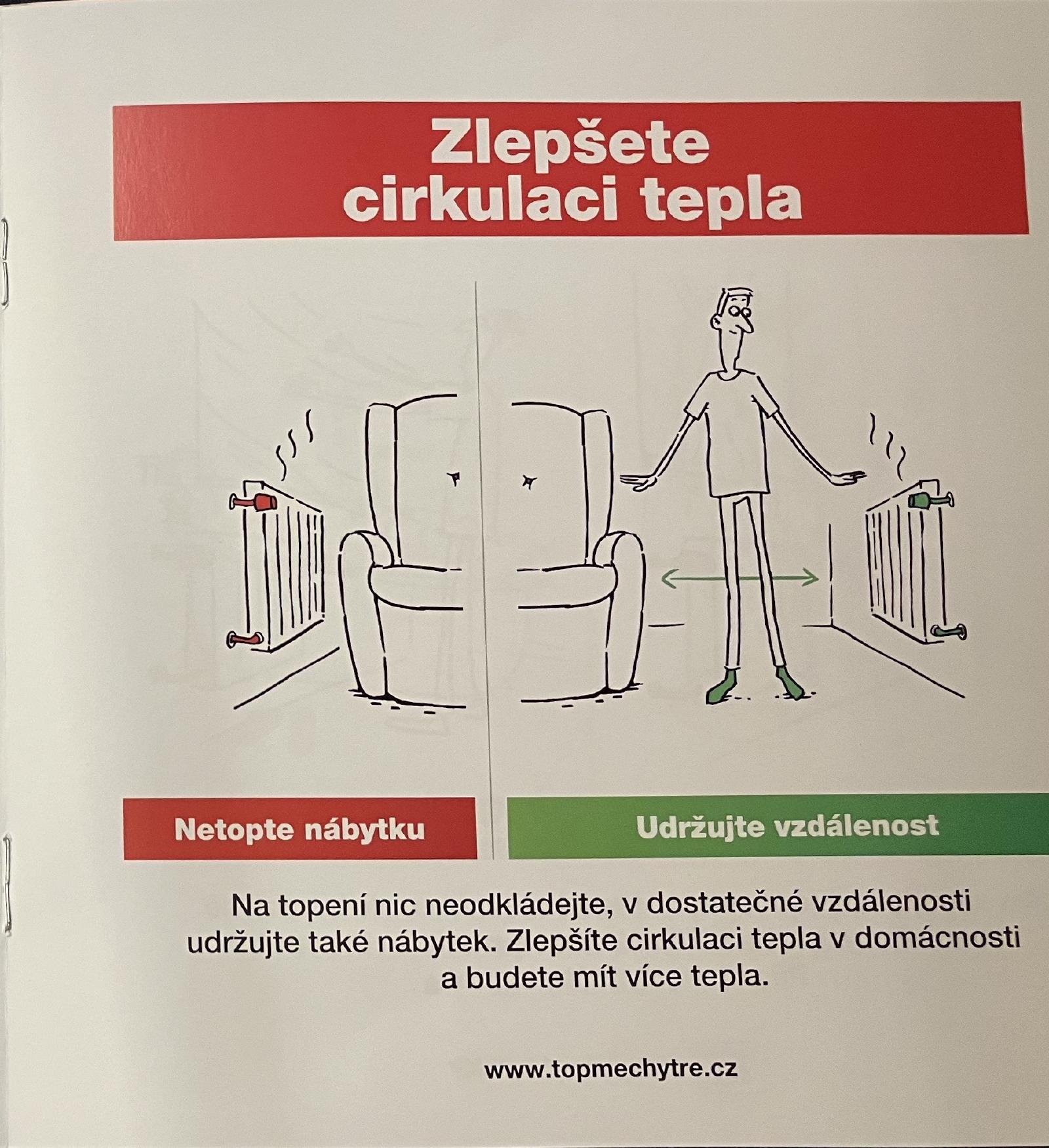
| Improve Heat Circulation |
| Don't Heat the Furniture | Maintain Space |
Do not place things on the radiators and also maintain space from furniture.
Improve heat circulation in the home and you will maintain higher temperatures.
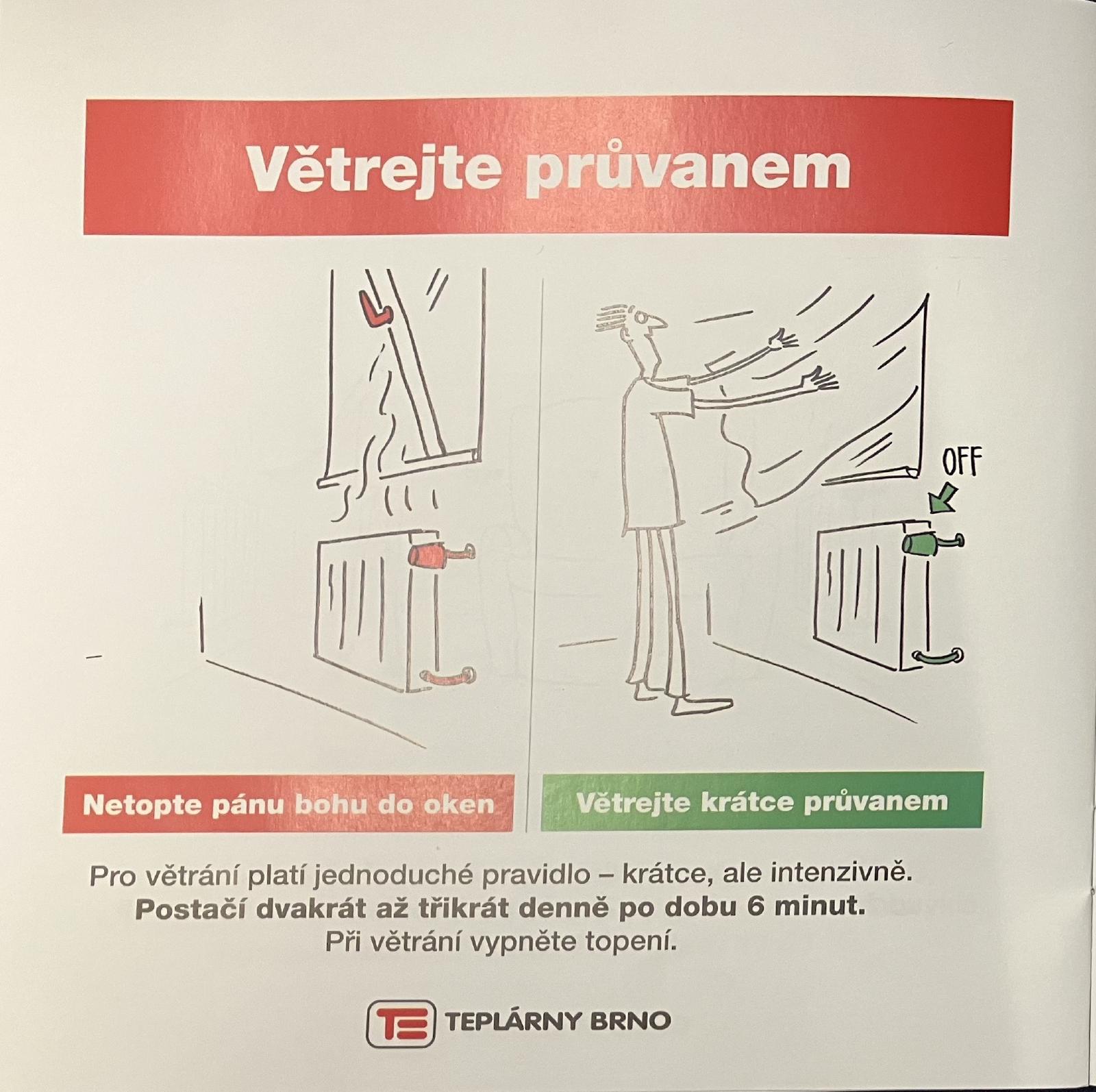
(Lauren’s Note: It’s worth noting here that Czechs place a high value on having healthy environments and one of the things that we do is to “change the air” several times per day. What this means is that every day, 2-3 times per day, we open all the windows, turn on vents and fans and literally change the air in the apartment. This happens no matter the weather because having fresh air is important. So in the page below, when they are talking about ventilating properly, this is what it’s referring to.)
| Ventilate Efficiently |
| Don't Let All of the Heat Out of the Windows | Ventilate for Short Bursts |
For changing the air, there is a simple rule - short but intense.
It is sufficient to change the air 2-3 times daily for 6 minutes.
During the changes, make sure you turn off the heat.
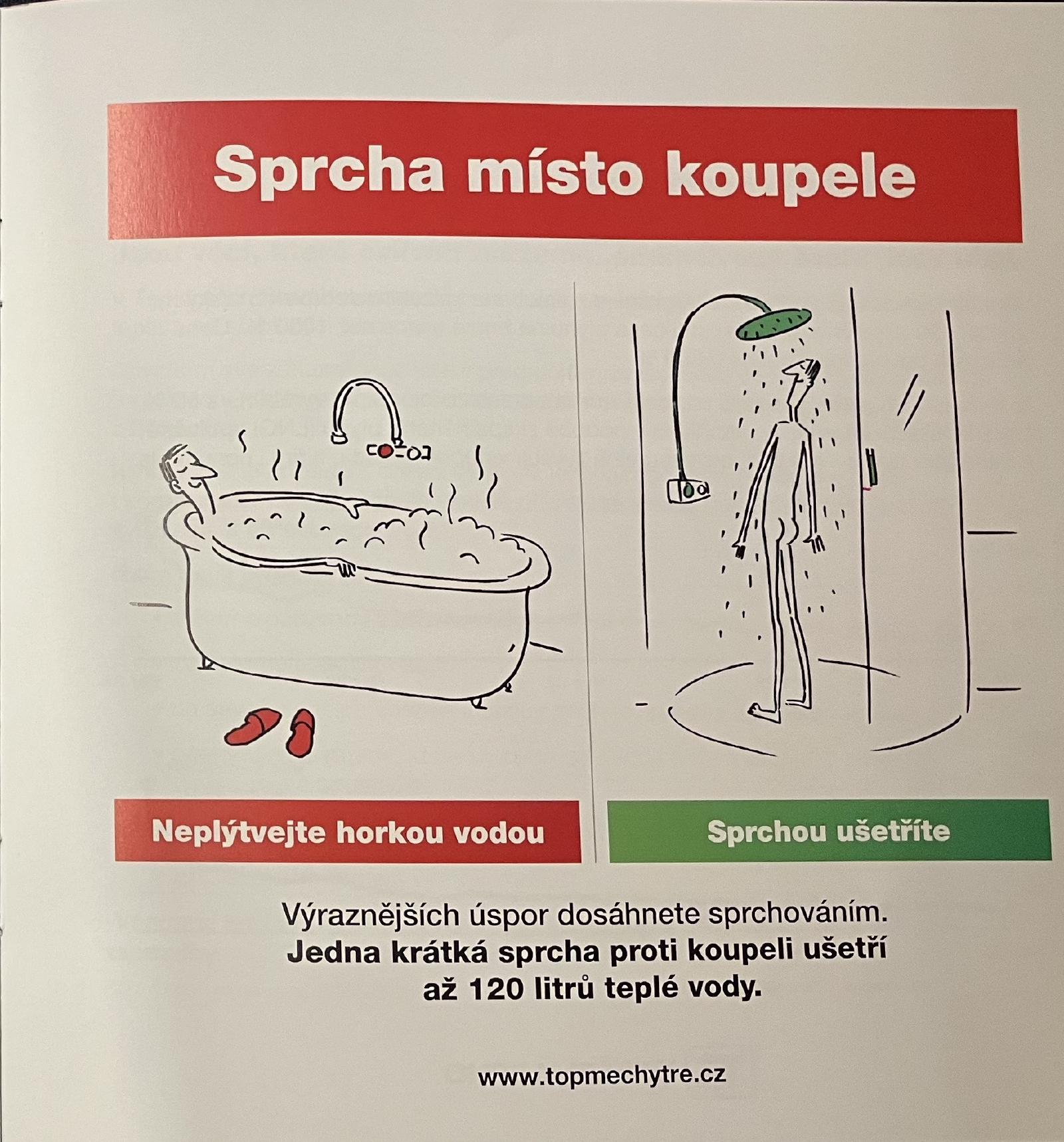
| Take showers instead of baths |
| Don't Waste Hot Water | A Shower Will Save You Money |
Significant savings can be achieved by showering.
One short shower, as compared to a bath can save up to 120 litres of hot water.
| Why Energy Prices are Rising |
| There are things which we cannot change |
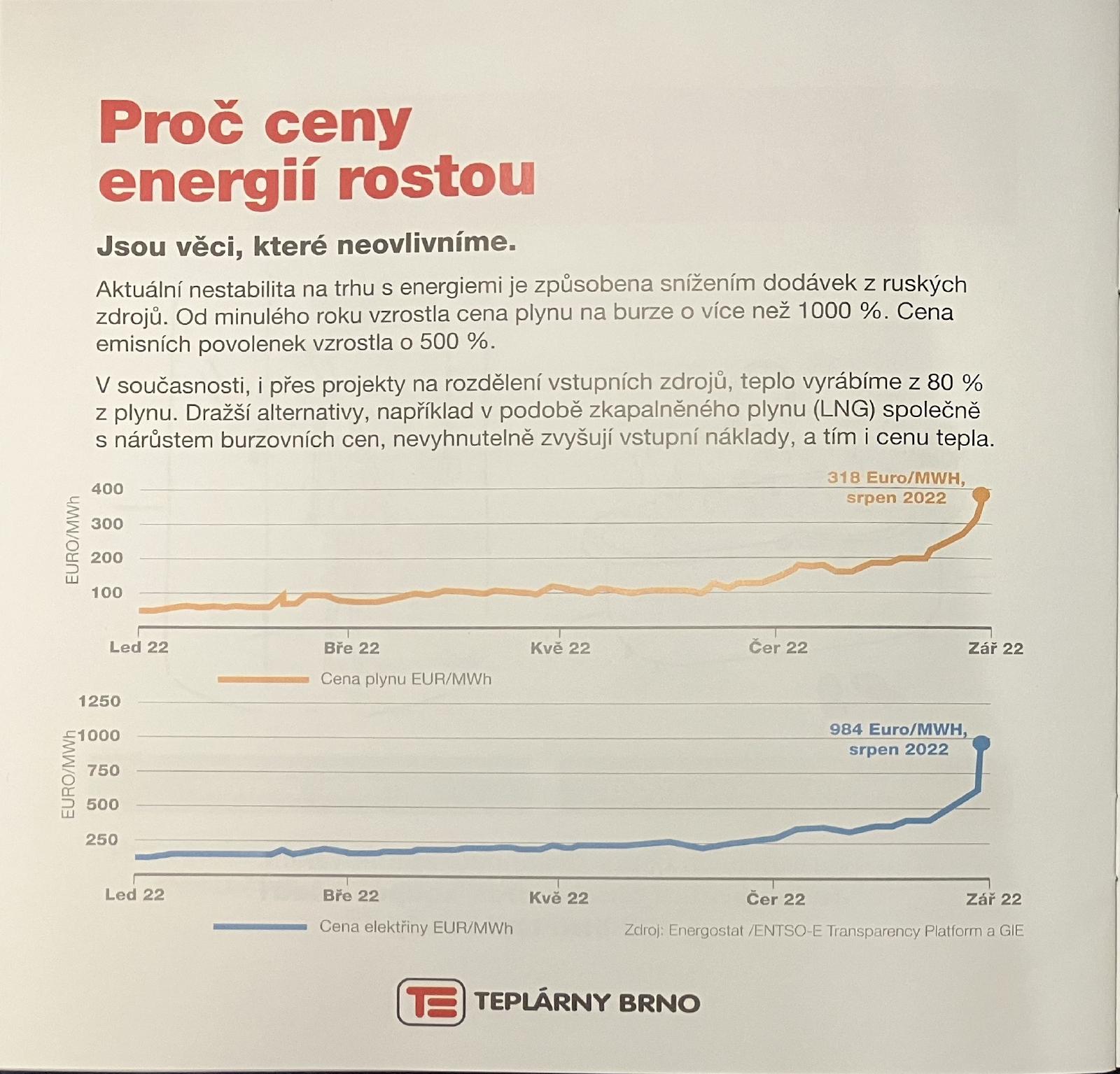
Instability in the energy markets is caused by a reduction in supplies from Russian sources. Since last year, the prices of gas have risen on the stock exchange more than 1000%. During this same time, prices of emission allowances rose 500%.
Currently, despite projects to find other sources, 80% of our heat comes from natural gas. More expensive alternatives, for example, in the form of liquified natural gas, together with the increase in stock exchange prices inevitably lead to increased costs and thus, the price of heat.
(The first graph below shows the cost of natural gas from January through October 2022 and the second graph shows the cost of electricity during that same time period.)
| What Teplarny Brno is Doing to Stabilise Heating Distribution |
| There are things which we can change |
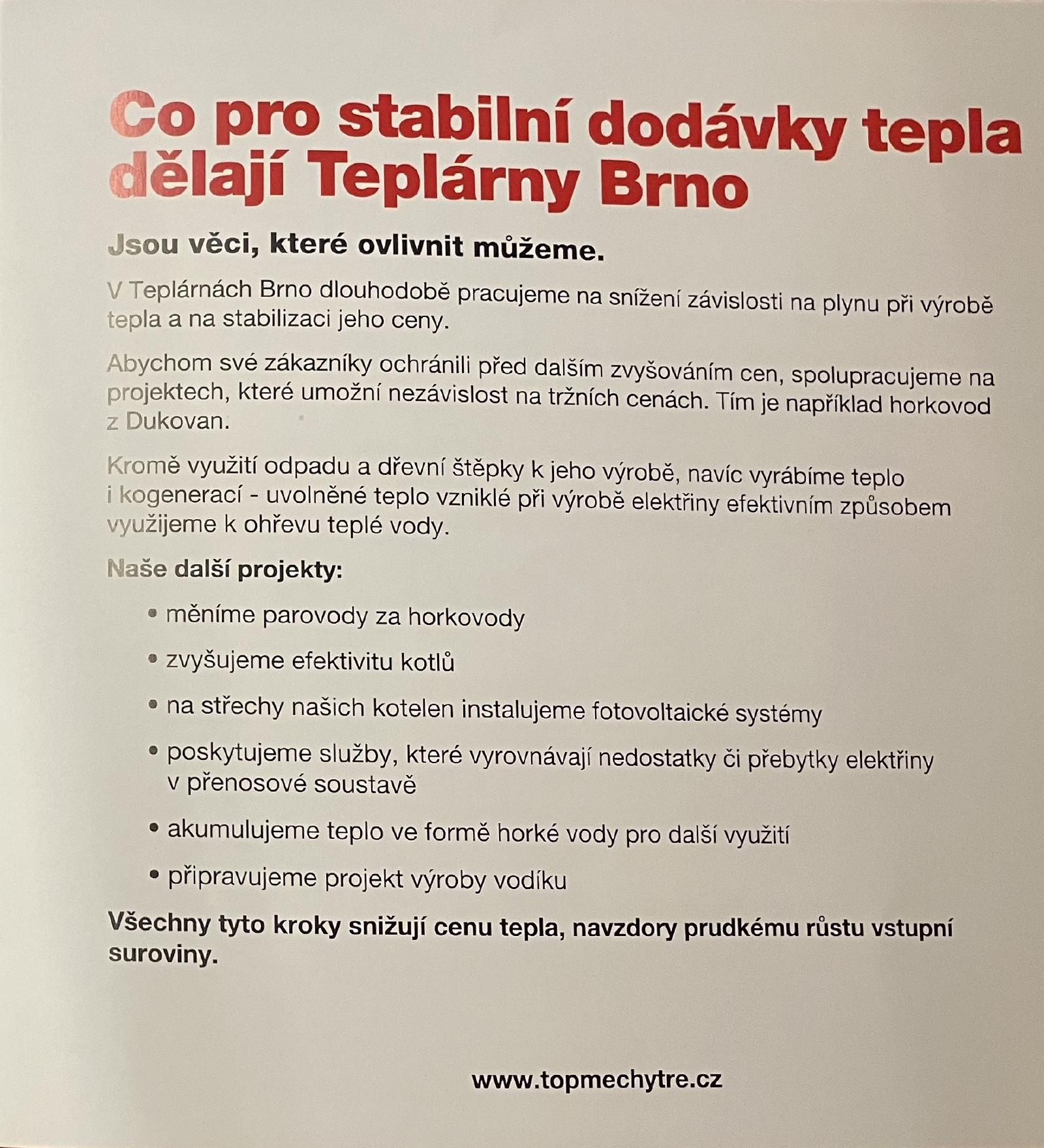
At Teplarny Brno, our long-term plan is to reduce dependance on gas for heat production and stabilise prices.
In order to protect our customers from further price increases, we cooperate with projects that will enable us to be independant of market prices. An example of this is the heat pipe from Dukovan. (Lauren’s note: Dukovan is a nuclear energy plant and there is a plan in place to use the heat from that to provide heating for Brno. Similar to above, building pipes from the plant and transporting the heat in the form of steam or hot water.)
In addition to burning waste and wood chips, we also recuperate heat that is a by-product of creating electricity and use it to efficiently heat water. (Lauren’s note: some of the heating plants burn municipal waste to create heat instead of burning natural gas.)
Our next projects:
- Changing steam pipes into hot water pipes
- Increasing the efficiency of boilers
- Installing solar panels on the roofs of heating plants
- Providing services that compensate for shortages or surpluses of electricity in the transmission system
- Accumulating heat in the form of hot water for other uses
- Preparing a hydrogen production project
All these steps lower heating prices despite the rapidly increasing costs of inputs.
Using the tips in this publication to set temperatures can help you save up to 20% per month.